
From the mud to the museum
Hanz spent most of his life underground. Literally. For centuries he lay hidden in the mud, until amateur archaeologist John ten Pierick decided in 1998 to take his metal detector to the grounds of De Sypel swimming pool. Step by step, he scanned the area. And then the thing started beeping.
Half a metre underground, Hanz was waiting. Old, John knew immediately. Very old. At least 500 years old. And in Hanz’s case, even much older. What he had found later turned out to be one of the most important relics from Harderwijk’s Hanseatic era.
A royal past
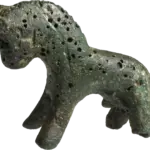
Horses like Hanz were made in the Middle Ages on the orders of Haakon V, the then King of Norway. They served as a tool for determining the value of coins. So Hanz is not just a decorative figurine — he was a serious working tool at a time when Harderwijk flourished as a Hanseatic city.
Incidentally, he has been through quite a lot. One of his legs once broke off — and that leg wasn’t simply thrown away, but pushed to one side. Hanz can still get angry about it.
At home in Harderwijk
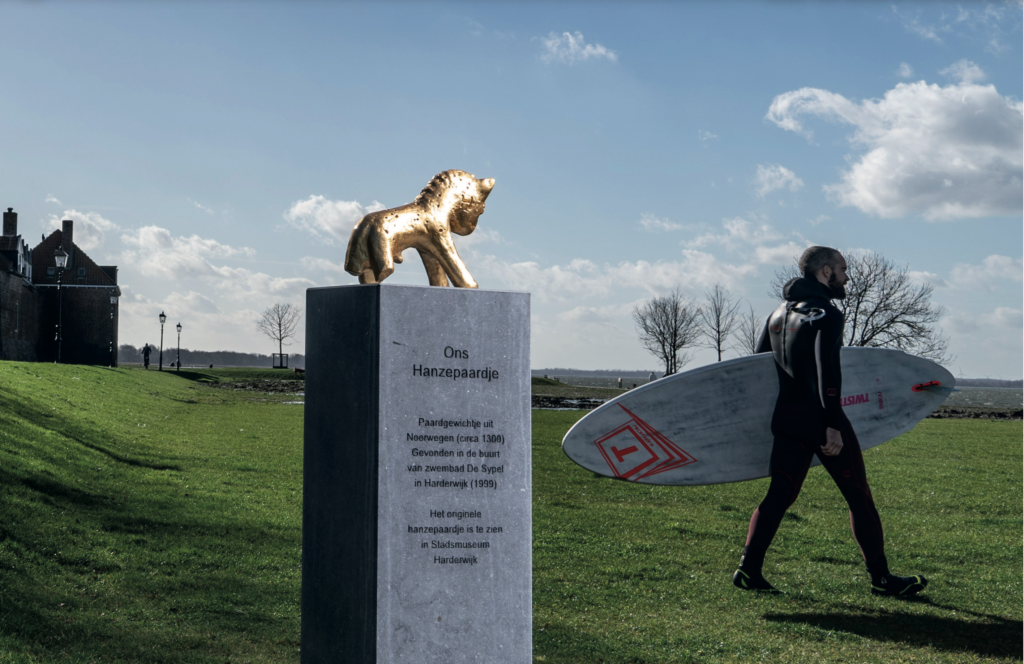
The National Museum of Antiquities was only too keen to acquire Hanz. But John felt he belonged in Harderwijk. He sold the statuette to the local council, which in turn loaned it to the Harderwijk City Museum. A grand gesture — and big news for the town.
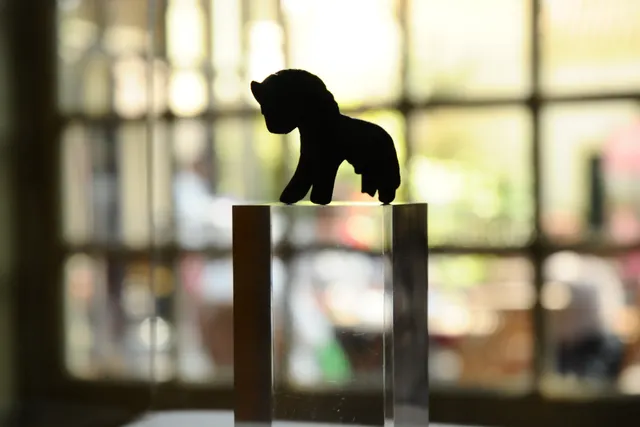
The City Museum went all out for the opening. They had no fewer than 16,000 copies of Hanz made. Primary school pupils were invited to paint them, and the best one was placed next to him in the museum at the opening. He has been living there for years now. And he is happy to be there.
Harderwijk through the eyes of Hanz
As the city’s oldest resident, Hanz sees more than anyone else. He knew the city as a thriving Hanseatic city, saw merchants and sailors arriving from all corners of the globe, and survived the great city fire of 31 July 1503 — though only just. He saw the Grote Kerk grow, the city wall disappear and later light up with LED lamps in the road surface. And he sees how Harderwijk is preparing for the International Hanseatic Days in 2031.
His advice? Head to the tourist office on the Markt, walk past the Grote Kerk, follow the illuminated line of the old city wall through the streets. And, of course, just pop in to see him at the City Museum. He’ll be waiting there.